Hayward Landing Dams on the Mumford River
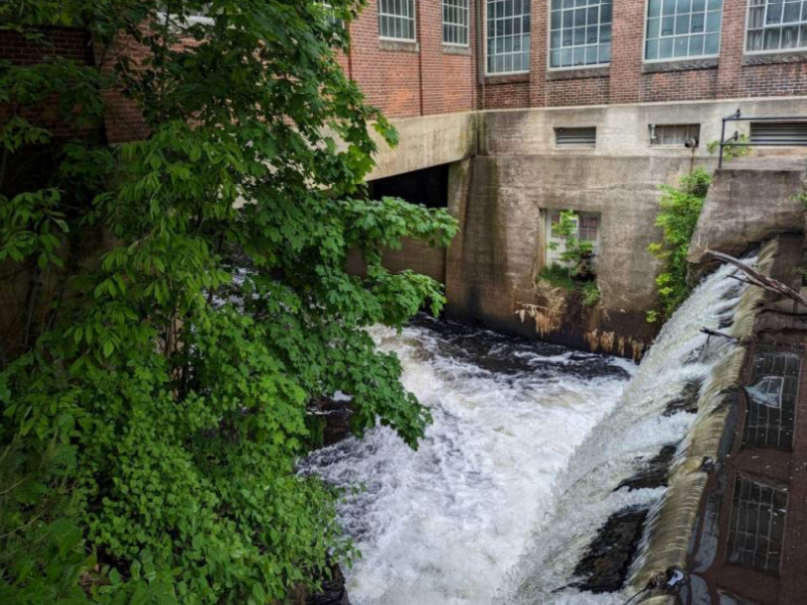
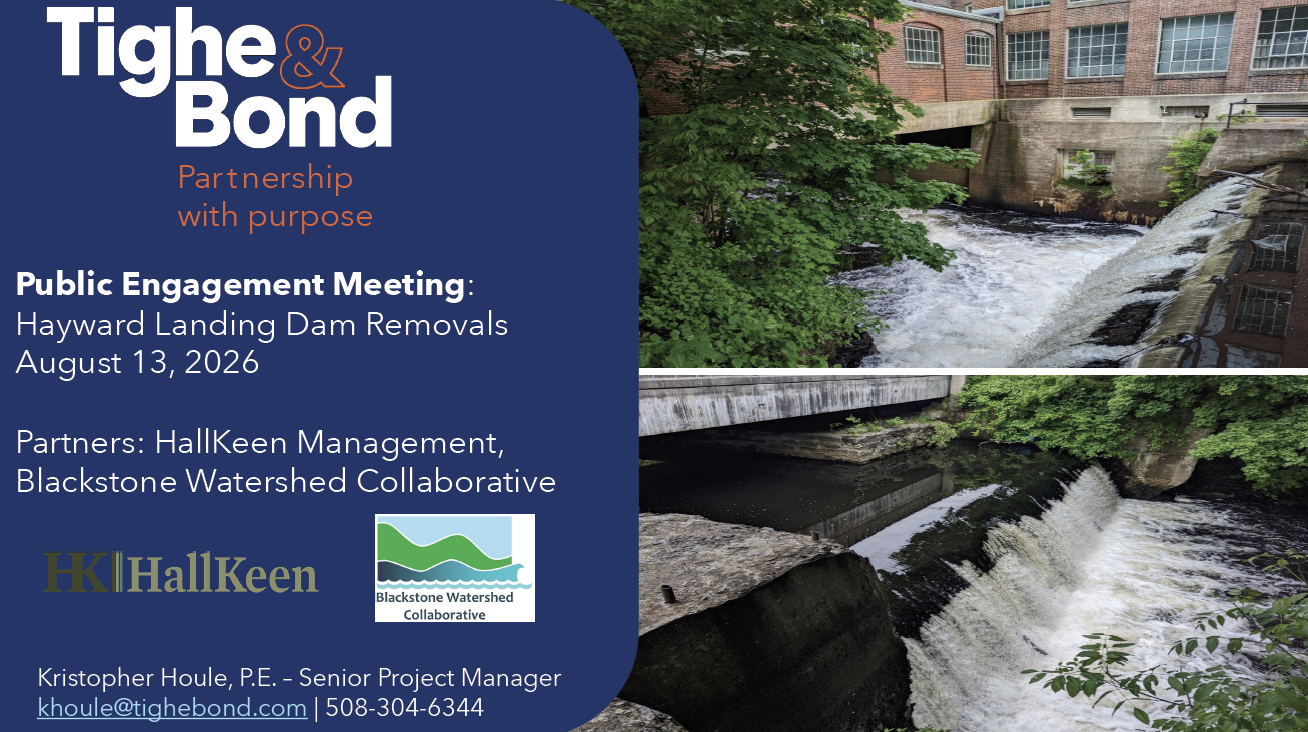
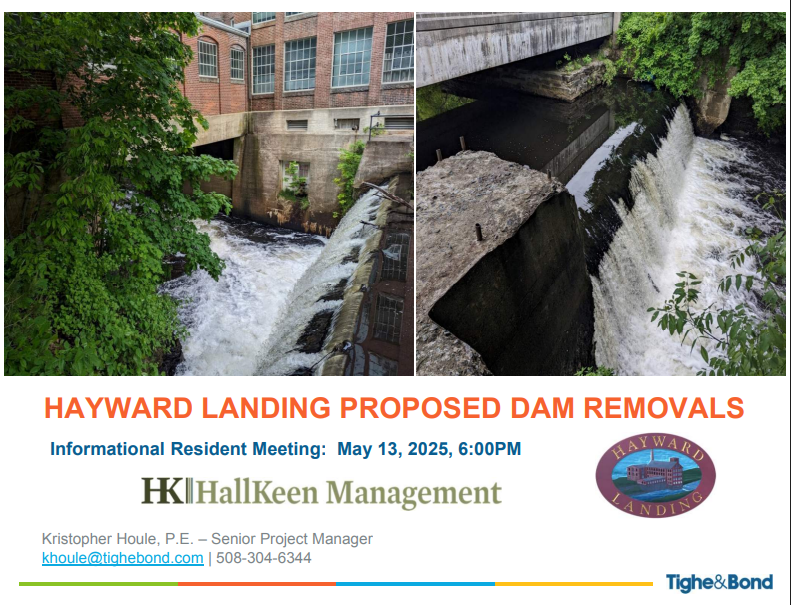
Douglas Mill Pond Dam
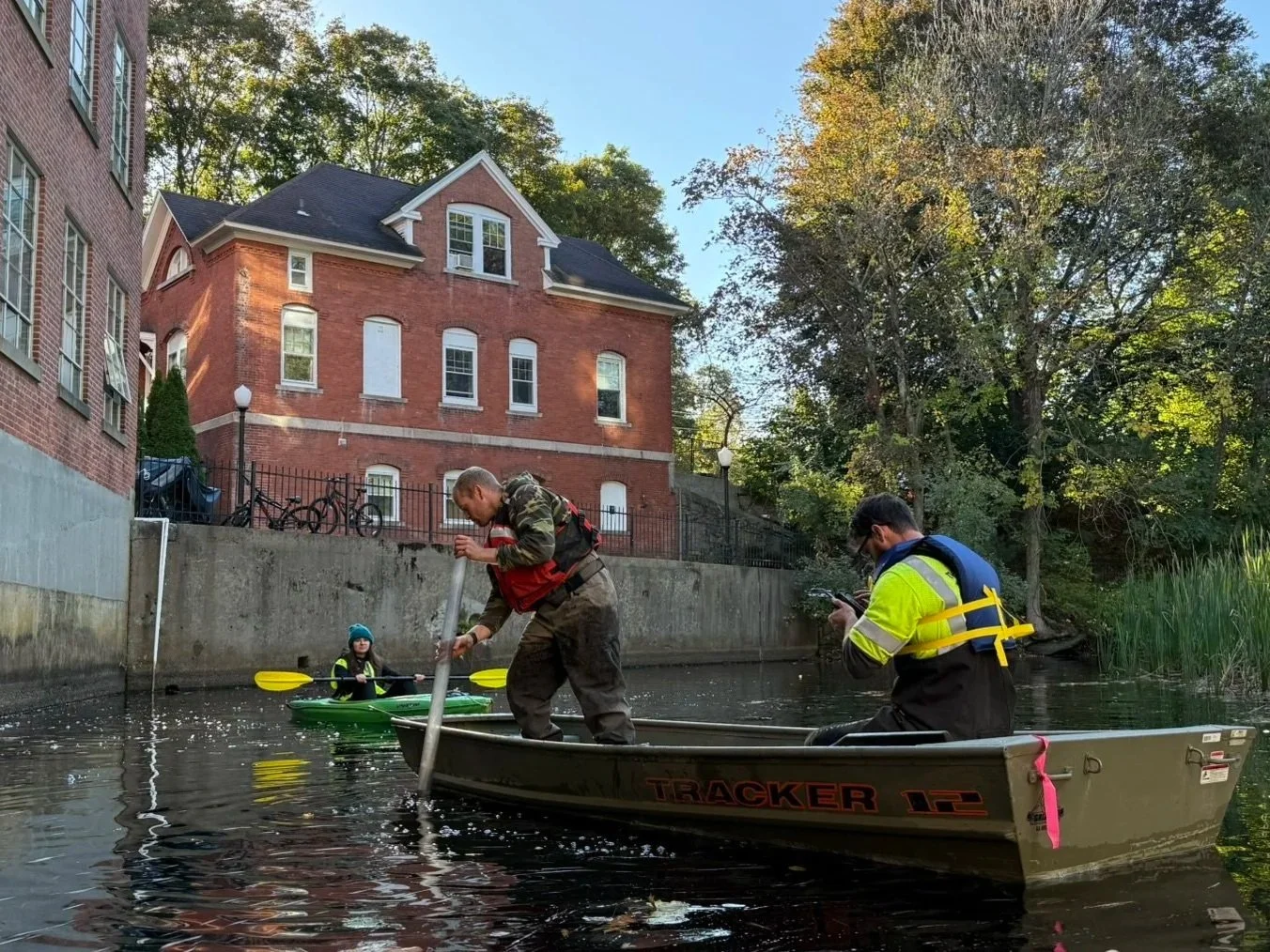
(ID: MA02760) - Downstream, near apartment building
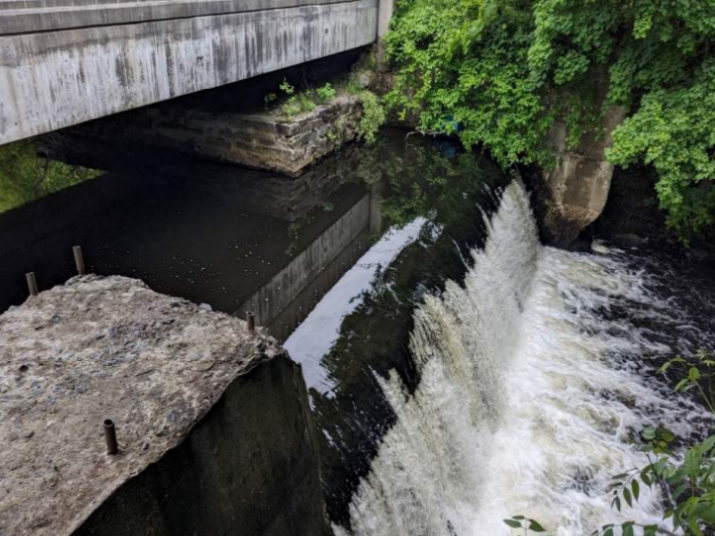
Old Mill Pond Dam
(ID: MA01173) - Upstream, near Cooks St. Bridge
The Basics:
What you need to know
Context & Community Impacts
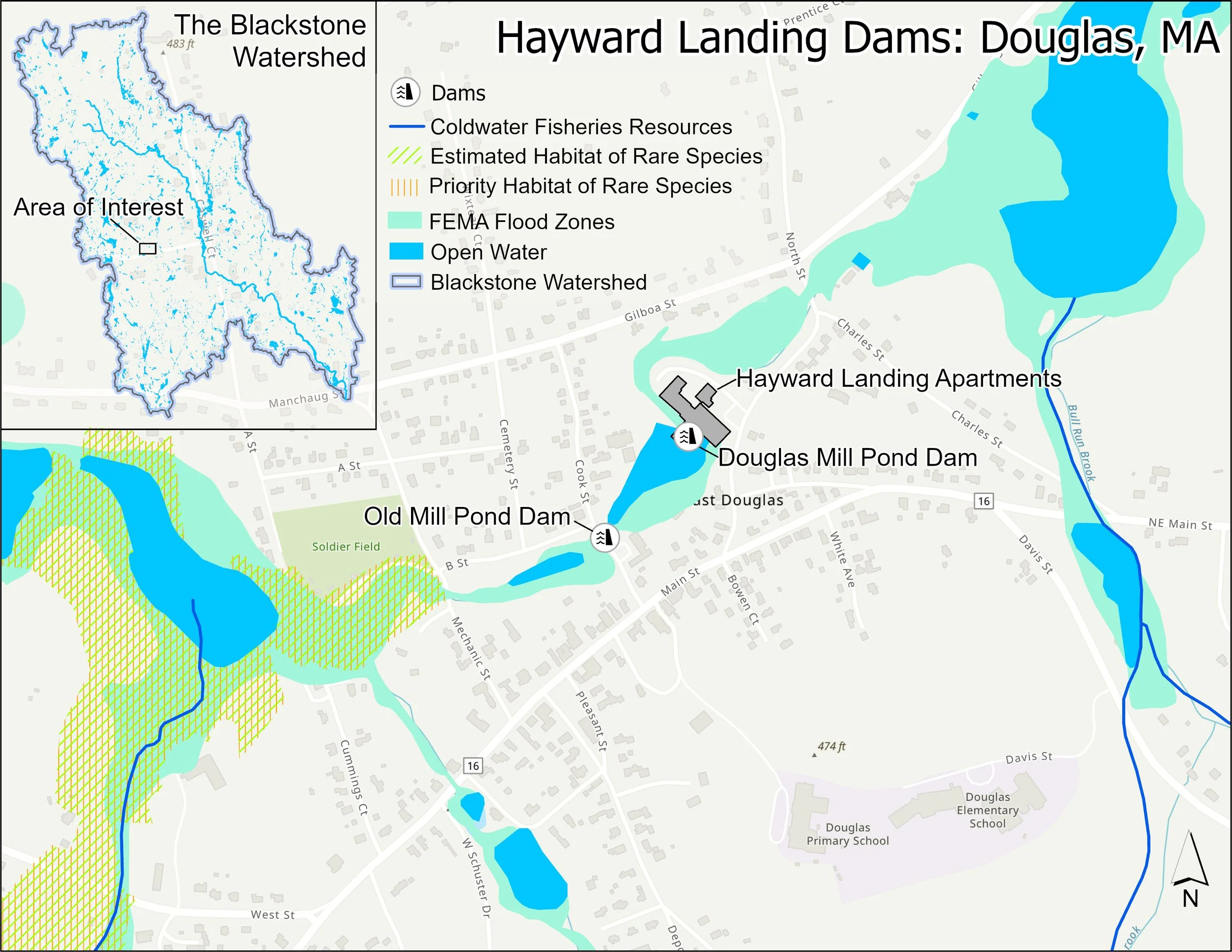
The Douglas Mill Pond Dam and Old Mill Pond Dam are two dams in Douglas, MA that are on the Mumford River. Both dams are privately owned by the adjacent Hayward Landing Apartments and originally powered a mill where the apartments now reside. They no longer serve any purpose, are in poor condition, and are considered “Significant” Hazard according to the state Office of Dam Safety.
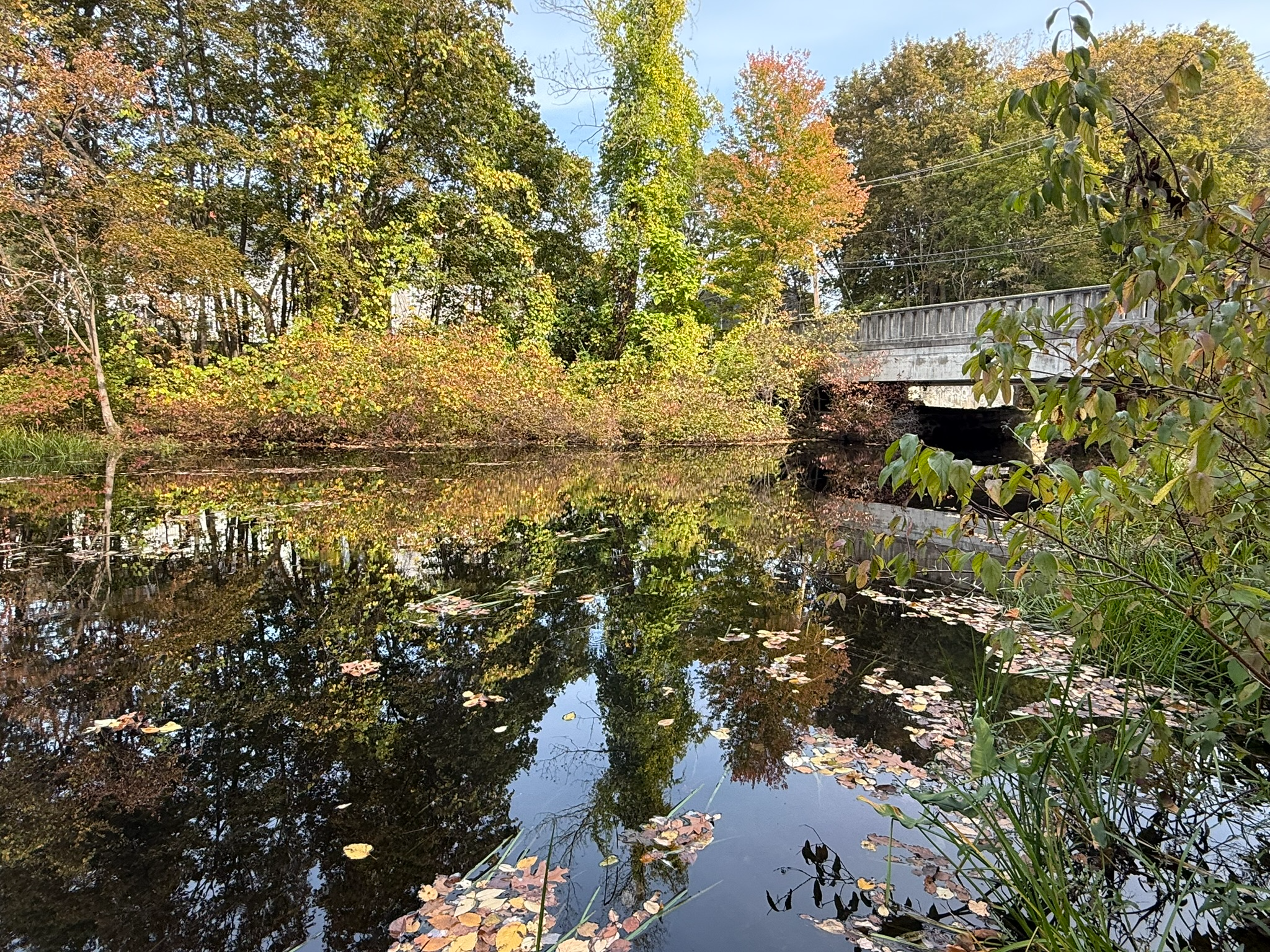
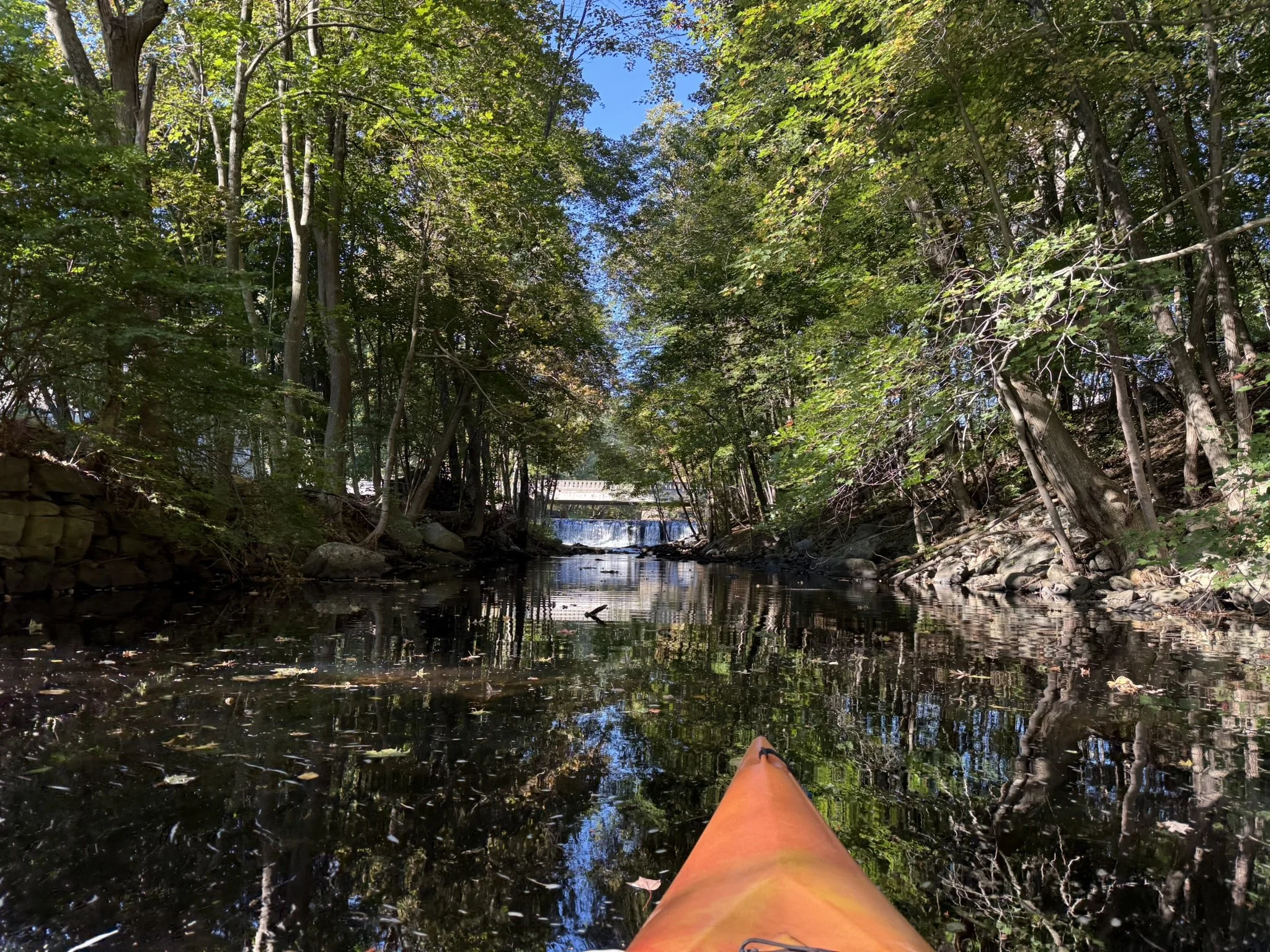
The upstream dam, Old Mill Pond Dam, is immediately downstream of and integral with the Cook Street Bridge and is 65’ across. The downstream dam, Douglas Mill Pond Dam, is adjacent and connected to the Hayward Landing Apartment building itself and is 52’ across. Both dams are structurally 17.5ft high and are “run of river” concrete gravity dams. Dam failure would pose a risk to the apartment complex and downstream infrastructure. A critical component of exploring dam removal is performing extensive structural analysis to ensure any removal projects can be completed safely for the town and local residents.
Ecological Impacts
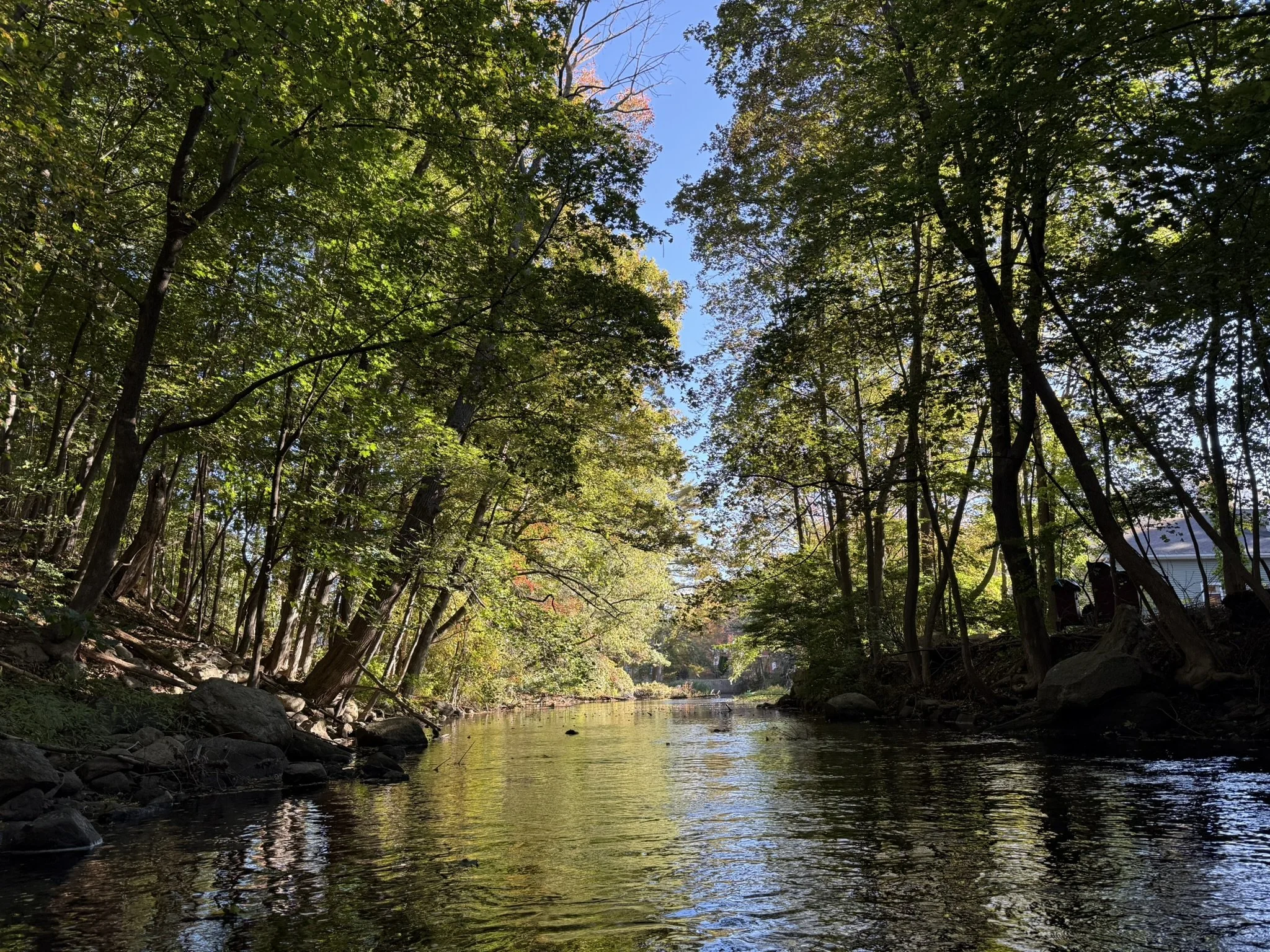
The dams impacts water quality by slowing and warming water as it’s impounded and they also prevent habit connection for local species, including coldwater fish such as Brook Trout. Their removals would connect over 7 miles of river habitat and improve local community resilience by eliminating the danger of a failure. All together, this makes them prime candidates for removal.
Project Status
The private owner of the dams has been interested in dam removal in order to remove the potential for failure and downstream impacts as well as reduce ongoing costs to maintain the dams. In 2023, they partnered with their engineers at Tighe & Bond and the Blackstone Watershed Collaborative to successfully receive two grants (one state, one federal) that have funded much of the work to determine the assessment, surveying, hydraulic analysis, phasing, sediment management, permitting, and other elements necessary to advance toward removal.
Currently, funding is secure through full design and permitting, which will be complete in 2027. The partnership anticipates applying for additional construction funding beginning in the fall of 2026 or spring of 2027, depending on grant availability.
Enhancing Public Access
Reducing Risks to Community & Improving Public Safety
Improving River Connectivity & Ecological Health
The details:
What, why, where, how & when?
What’s the project?
The goal is to create a plan to safely remove both dams and the risk they pose to the community as well as improve river connectivity and ecological health. Funding is currently secured through full design and permitting, but not yet for actual deconstruction. See “when” below for more details on what’s been completed and what’s yet to come.
Why: removal benefits
Improving Public Safety
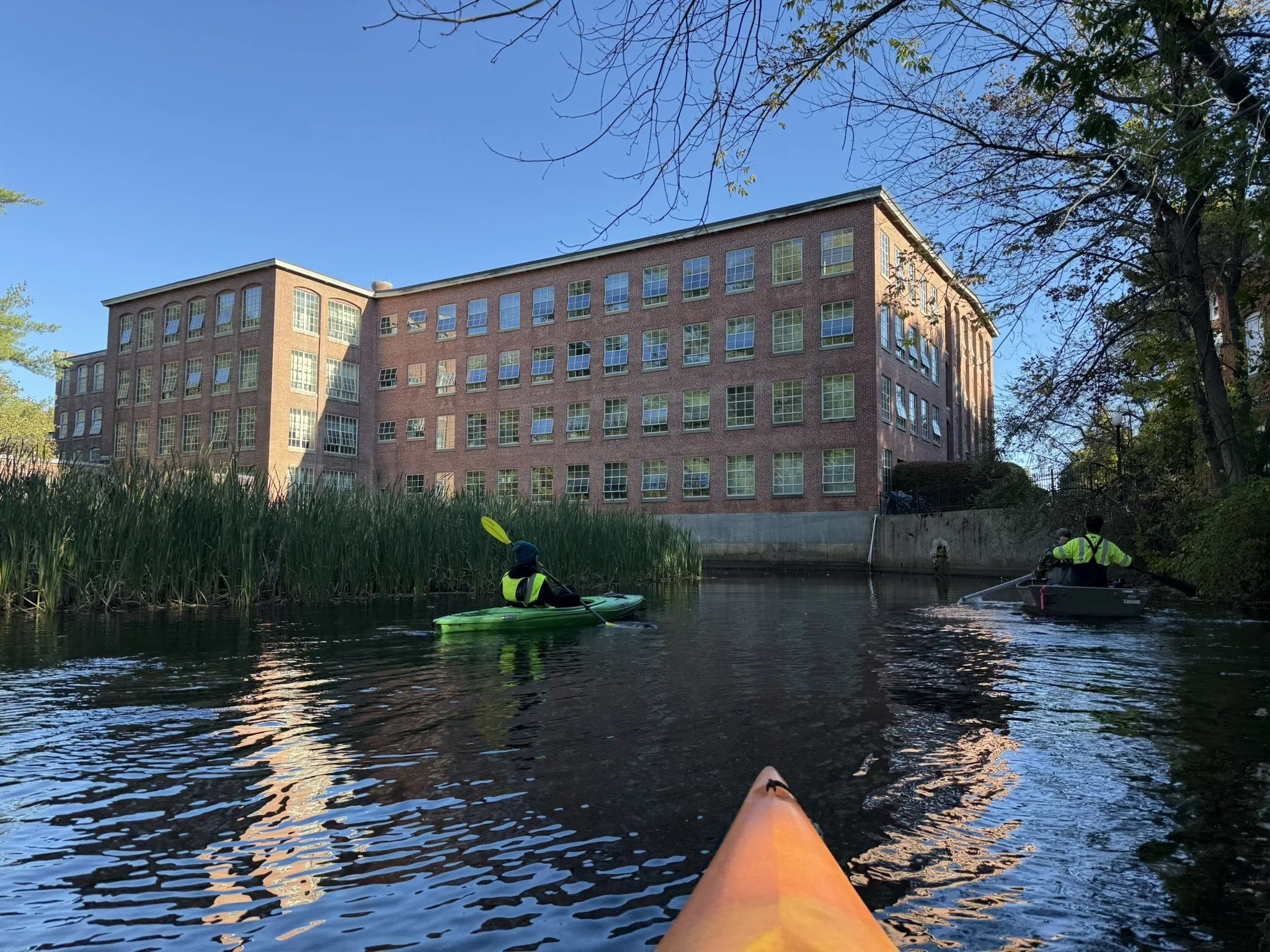
The Town of Douglas’ Municipal Vulnerability Preparedness (MVP) and Hazard Mitigation Plans both identify dam failure as one of the town’s most significant public safety hazards. Currently, both dams are considered Significant Hazard dams in Poor Condition by the MA Office of Dam Safety. These dams artificially increase upstream flood elevations and their potential for failure poses a significant risk to downstream residences, businesses, and public infrastructure. Dam failure would impact numerous private properties, including two apartment complexes, the Douglas Water Department property on Charles Street, the North Street bridge, and the Gilboa Pond Dam. Removal of the dams would significantly reduce the potential for impact to these critical properties.
Improving Ecological Health & Resilience
Dams have documented negative impacts on stream temperature and dissolved oxygen, which is particularly impactful to Coldwater Fishery Resources (CFRs), where temperature-sensitive, coldwater species such as Eastern brook trout live and are particularly susceptible to temperature shifts. Dam removal has immediate and long lasting benefits in cooling water temperatures and improving local habit.
Additionally, these dam removals will open 4.6 river miles upstream, including to the mainstem and tributaries to the Mumford River, connecting a total of 7.6 river miles for local species that currently cannot pass over either dam. The Mumford River has CFR immediately upstream and downstream of these dams, meaning their removal would directly contribute to expanding this rare habitat. There is also Priority and Estimated Habitats of rare species and wildlife upstream, which would be re-connected through the dams’ removal.
Improving Public Access
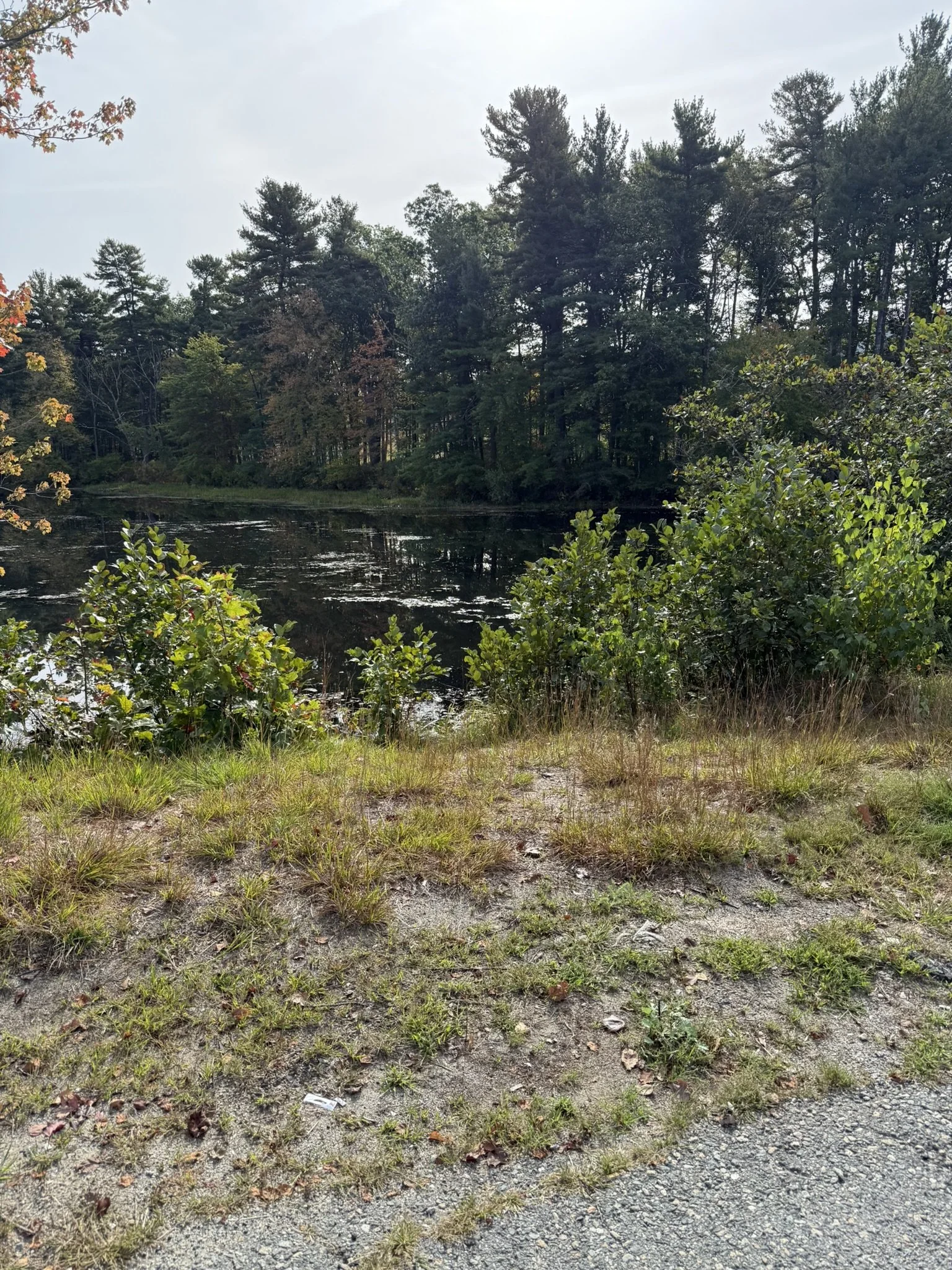
Eliminating the public safety hazard through dam removal also reduces the safety risk to pedestrians and residences that currently enjoy the adjacent riverwalk along the Mumford at the Hayward Landing Site. Additionally, the dams currently limit boaters and kayakers in how far they can explore the Mumford River. By eliminating these two barriers, it expands the ability for regional water recreation and the connection to the river that paddling provides. To learn more about the benefits of water access, see our paddling page.
Where: regional context
The Mumford River and it watershed have often been a focal point of regional restoration work due to its extensive critical habitat and opportunity for improving those conditions. As noted above, the Mumford has priority BioMap habitat, including Coldwater Fishery Resource areas, habitat for rare and priority species, and resilient landscapes.
In 2022, the Collaborative worked with a GIS intern explore priority areas in the Blackstone watershed for dam removal and culvert replacement, and the Mumford watershed came up as a hotspot due to these features. We’ve been exploring opportunities for dam removal and other restoration efforts - including the Linwood Pond Dam in Northbridge, which is also on the Mumford River and was recently awarded technical assistance to complete a dam removal feasibility study from Mass Rivers Alliance.
How: phasing & logistics
Project phasing is not yet completely known. It’s possible that the two dams are slated to be removed at the same time. However, it’s also possible that due to available funding, logistics, or permitting timelines, that they are proposed undergo a phased removal over a longer time period As the project continues, additional work will occur to inform this, such as the detailed geotechnical analysis and completing the permitting. As these details are known, this page will be updated.
When: project timeline
Currently funding has been secured to complete a complete design and full permitting for the project, which is anticipated to be complete by spring 2027. Additional funding for implementation will be pursued once the plan is in place.
Stay tuned for the full scope of what’s been accomplished so far and what’s coming up!
Q&A
-
The dams were deemed in Poor condition around 2017. Hayward Landing submitted an application requesting approval for removal and funding of both dams in 2018 to the Department of Fish & Game, Division of Ecological Restoration which was denied at that time. Without having secured approval or funding; Hayward Landing began routine dam inspections and monitoring including submission of the required bi-annual follow-up inspections to the Office of Dam Safety. Since that time engineering firms, like GZA GeoEnvironmental Inc. and Tighe & Bond, have performed dam inspections, completed an Emergency Action Plan, and completed a dam removal feasibility study. Without securing grant funding, Hayward Landing would have to pay out of pocket for any work on the dams.
-
If the dams are removed there would no longer be a safety hazard for the residents of Hayward Landing. If the dams were to fail in their current state, it could affect the structural integrity of the apartment building and other downstream infrastructure. Additionally, downstream areas would become flooded.
Removing the dams would also improve access to the river for recreational activities like kayaking, canoeing, and fishing.
Removing the dams would also reduce costs that the owners may incur. There is very little funding available for private dam owners, especially for dam repair. There is more widespread funding available for public entities and for dam removal. Partnering with non-profits like the Blackstone Watershed Collaborative allows the dam owners to secure funding for dam removal that they otherwise would not be eligible for.
-
Removing the dams will improve connectivity between river systems, allowing greater public access for activities like kayaking, canoeing, fishing, etc. Dam removal will improve water quality and connectivity for fish and wildlife, including Coldwater Fisheries Resources. The removal of the dams will also reduce downstream flooding risk from dam failure and reduced upstream flooding from “nuisance” storm events, improving public safety for the communities both upstream and downstream of the dams. “Sediment starved” portions of the river downstream would be restored to more natural conditions
-
There are several reasons why dam removal is being pursued. Dam removal is preferred over dam repair as the dams no longer serve their original intended purpose. Although repairing the dam would address the dam safety related issues, there are disadvantages of dam repair:
In general, costs associated with repairing a dam are far greater than the cost of removal.
There are very limited funding opportunities for private dam owners to repair dams. More grant funding is available for dam removal or dam repair by public dam owners (such as a municipality).
HallKeen Management would continue to be responsible for dam inspection, routine maintenance (such as cleaning debris from the dam or doing concrete spot repairs), and potentially larger future repairs.
HallKeen Management would retain liability for dam failure (e.g., loss of property or potential loss of life.)
HallKeen Management would be required, by law, to hire an engineering firm to perform routine inspections of the dams and provide annual updates to an Emergency Action Plan for the dams. There are more benefits of removing the dam vs. repairing it:
The estimated construction cost for dam removal is typically far less than repair.
Dam removal is a one-time cost. Once a dam is removed there are minimal or no future maintenance costs.
Liability for dam failure would be eliminated once the dams are removed.
HallKeen Management would no longer be responsible for retaining an engineering firm to perform routine inspections or update the Emergency Action Plan.
The dams would no longer be regulated by the Massachusetts Office of Dam Safety.
Dam removal will improve water quality and connectivity for fish and wildlife, including to a Coldwater Fisheries Resource.
Dam removal will reduce downstream flooding risk from dam failure and reduced upstream flooding from “nuisance” storm events.
“Sediment starved” portions of the river downstream would be restored to more natural conditions.text goes here
-
Post dam removal there will be a change in aesthetics. The river channel that re-forms or is actively restored after a dam is removed will be a similar size and shape as the river upstream and downstream of the former impoundment. Sometimes the general shape of the old river channel can be seen in underwater patterns if you look at an aerial photograph of the impoundment. Some dams were built to increase the water level in a natural lake or pond and that natural lake will be restored to its original river-like state after dam removal. Changes to the landscape will be more or less dramatic depending on the size of the structure, its purpose and the size and shape of the impoundment.
There may not be as much sound as there is currently with the waterfall the dam creates, as there may be a more gradual stream slope post dam removal. There may be areas upstream of the dam(s) where additional natural waterfalls or riffles form.
Typical construction sounds like jack hammering, movement of machinery, power tools, etc. should be anticipated during construction but these will only be temporary in nature and will only occur during typical working hours during the week. Construction is not anticipated on weekends, early in the morning, or at late night hours. Construction timing and phasing will be communicated to the residents in advance.
-
As part of the project modeling and investigations, the stability of the Hayward Landing apartment building will be considered. Design alternatives will consider and model post removal conditions to ensure that the building does not experience any adverse effects associated with erosion or fast-moving water and erosion. Partial removal of the dam may also be considered to protect the Hayward Landing apartment building. To determine the effects of dam removal, computer models will be used to see the impacts on the Hayward Apartment building. A structural investigation will also be performed.
-
People can stay involved in the project and continue to provide ideas and feedback. People can also provide letters of support that can be used during permitting efforts or additional grant opportunities. During later project phases, residents or the community can attend regulatory hearings such as a Conservation Commission hearing to voice their support of the project. Participation at future community engagement meetings is strongly encouraged.
For a more complete list of Q&A from our October 2025 meeting with Hayward Landing residents, please see our resources listed below or click here.
Resources
Funding for this project was made possible by the Narragansett Bay Estuary Program and the Massachusetts Executive Office of Energy and Environmental Affairs. In partnership with Tighe & Bond and the dam owner, HallKeen Management/Hayward Landing Apartments.
"This product has been funded wholly or in part by the United States Environmental Protection Agency under Assistance Agreement 00A01336 to the recipient. The contents of this document do not necessarily reflect the views and policies of the U.S. Environmental Protection Agency, nor does the U.S. EPA endorse trade names or recommend the use of any products, services or enterprises mentioned in this document."