Gaining Fish Passage over the Lowest Four Dams on the Blackstone
The Project
History and Purpose
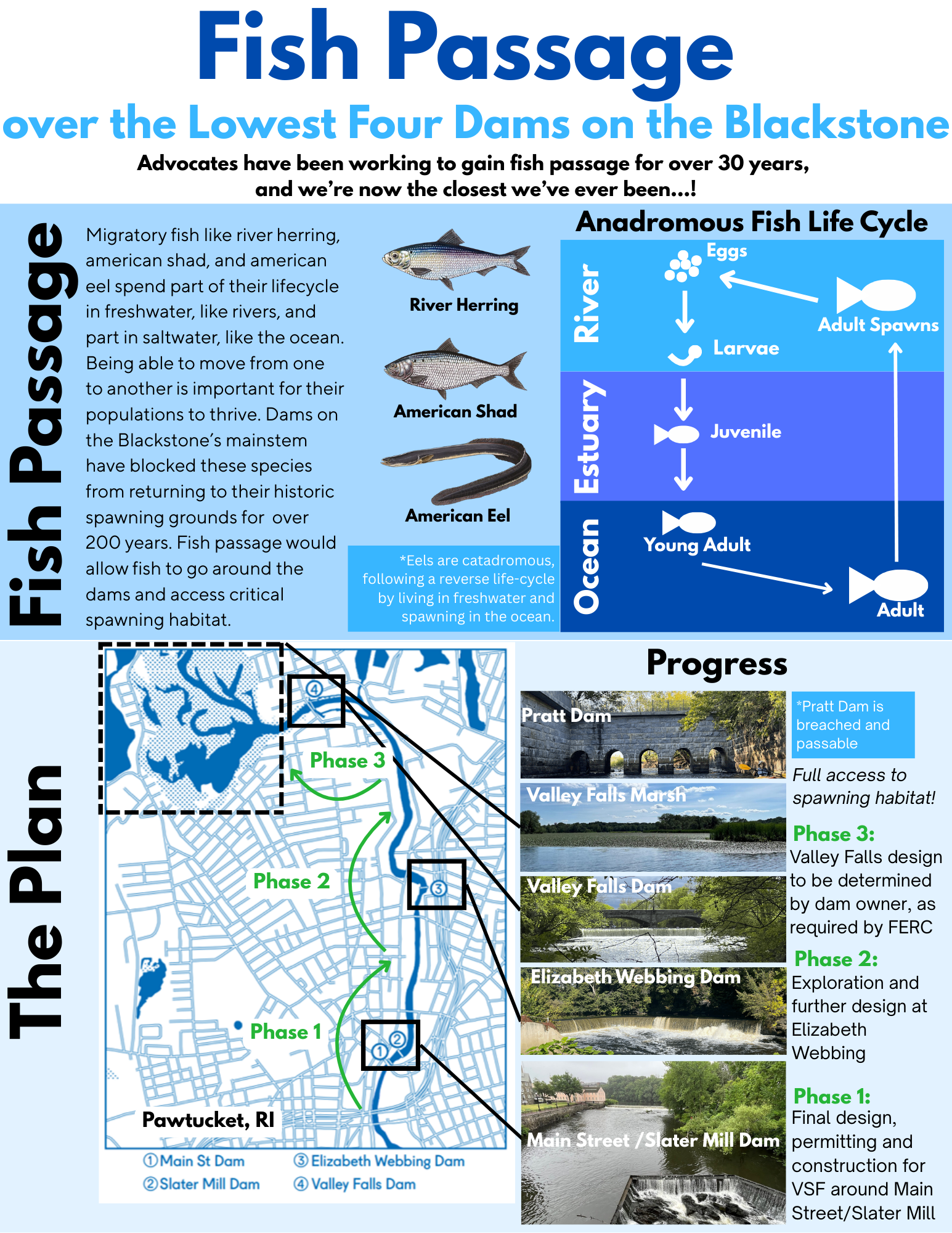
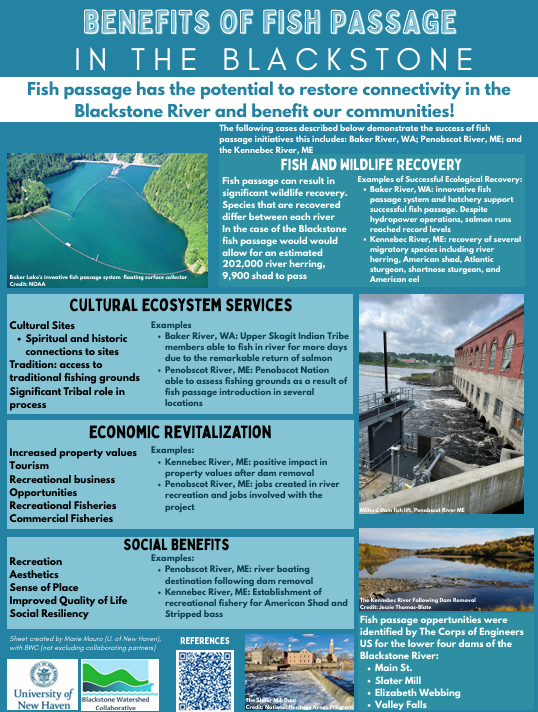
For the last 30 years, advocates have been working to create migratory fish passage over the lowest four dams on the Blackstone River, which would open up 4.8 river miles around 5 total dams, creating 206 acres of spawning habitat for an estimated 202,000 herring and 9,900 shad. We are now the closest we’ve ever been to achieving this decades long mission.
The Blackstone River - known to the Nipmuc as Kittacuck and Mishkittakooksepe to the Narragansett, historically was a tidal river. Prior to European colonization, the Blackstone River had abundant populations of migratory fish including shad, herring and salmon that lived and migrated between fresh and saltwater habitats. The construction of 39 dams on the mainstem of the Blackstone River prevented migrating fish from reaching historic breeding habitat and led to a significant decline in the fish populations.
Establishing fish passage would also include financial benefits to the region through the fishing and tourism industries as it provides critical spawning and nursery habitat for more than 60 species of fish and shellfish and over 200 species of birds, making it a desirable area in the region for commercial and recreational fishing, boating, and many other coastal activities.
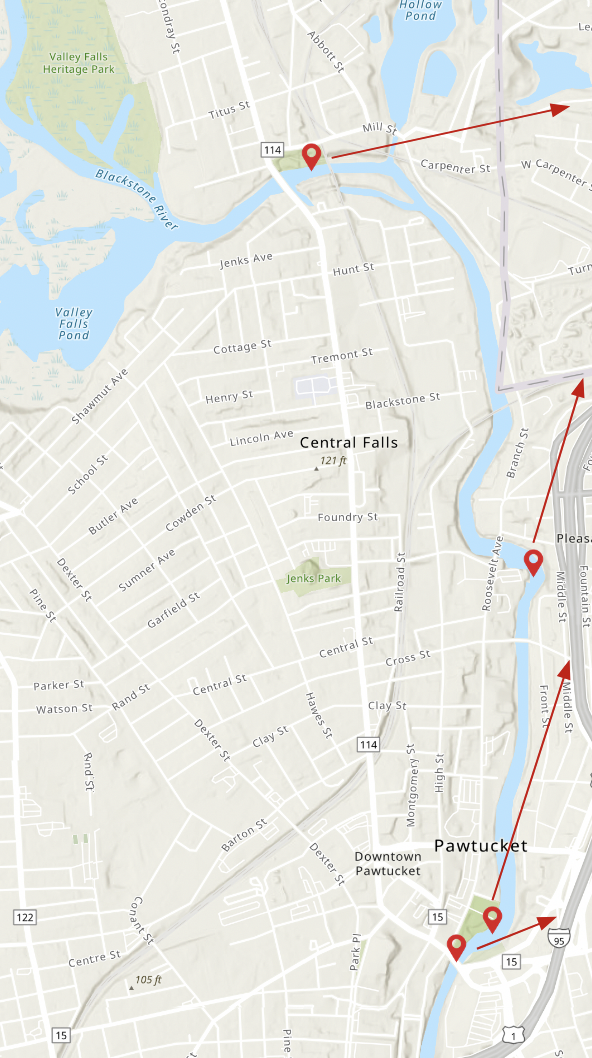
We are working alongside others in Rhode Island to provide fish passage around the Blackstone’s lower four dams to enhance aquatic connectivity and restore the balance between humans and the river. These dams are the Valley Falls and Elizabeth Webbing in Central Falls, and Slater Mill & Main Street Dams in Pawtucket.
Recent Project Improvements
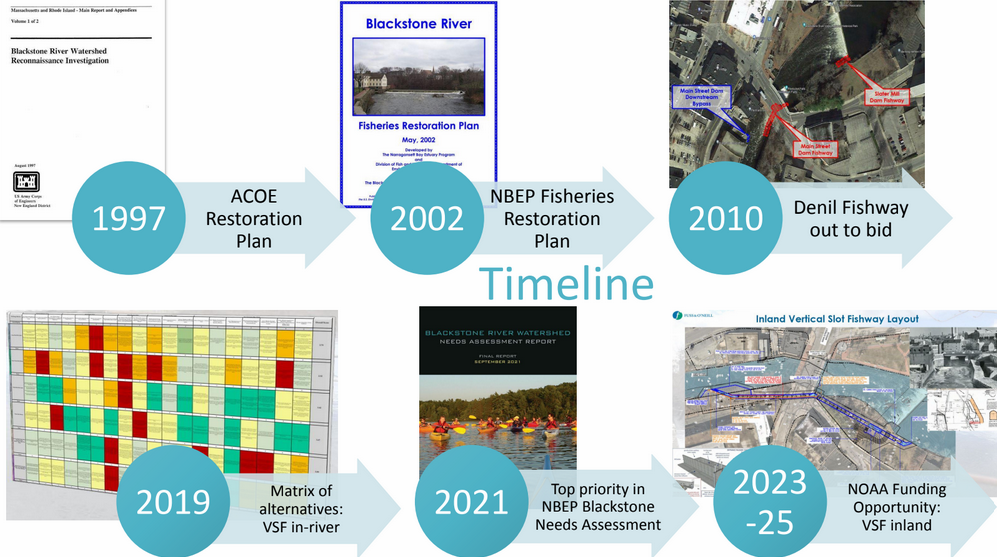
In 2023, RIDEM created a Community Advisory Committee (CAC), aimed at increasing transparency that meets monthly, facilitated by the Blackstone Watershed Collaborative. With the help of the CAC, RIDEM and the Narragansett Indian Tribe have submitted multiple grant applications to fund the construction of fish passage over the lowest two dams. Unfortunately, funding for construction has not yet been awarded.
In 2024, funding support from the Narragansett Bay Estuary Program supported RIDEM in hiring a new project manager to coordinate fish passage efforts.
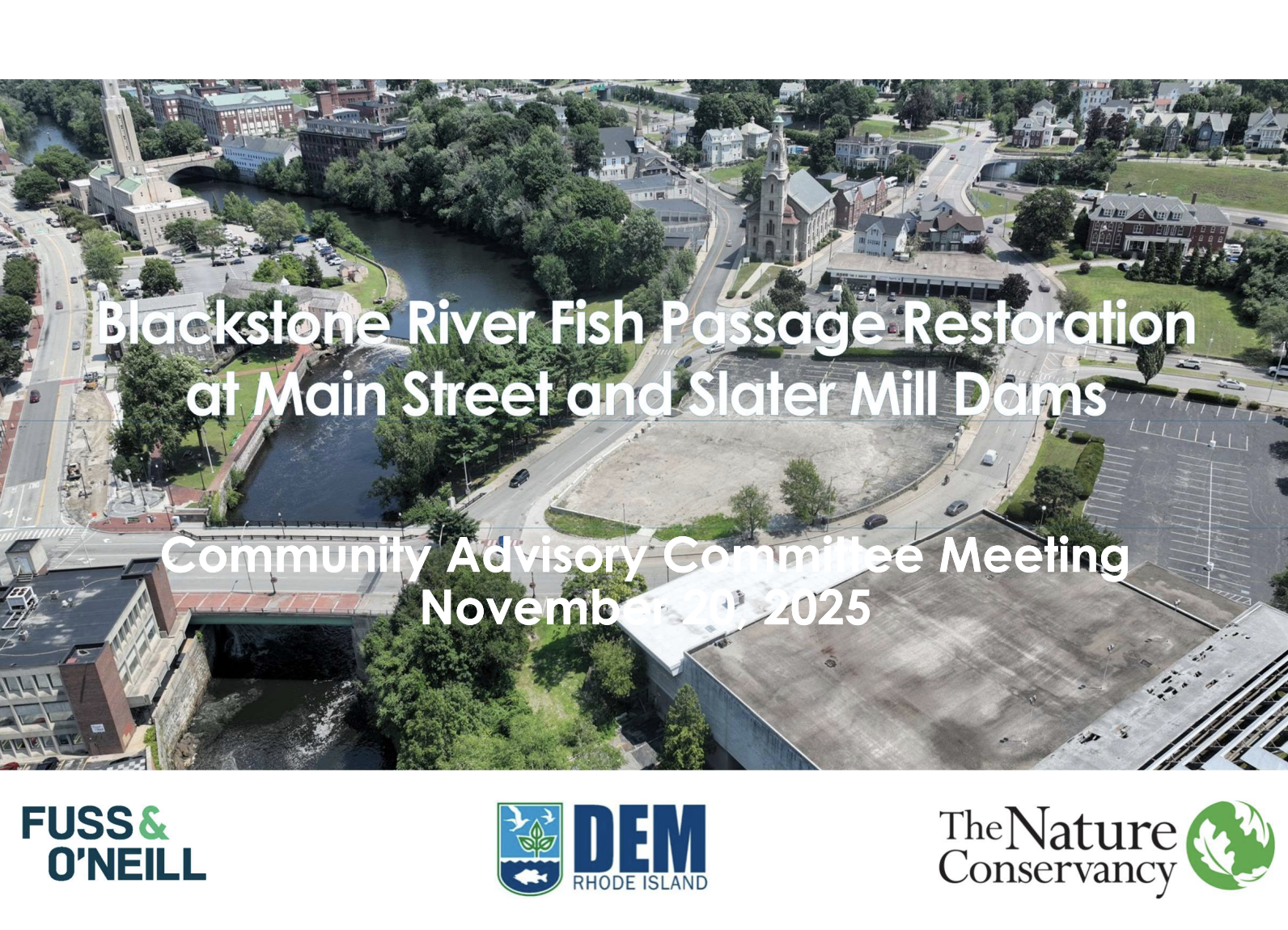
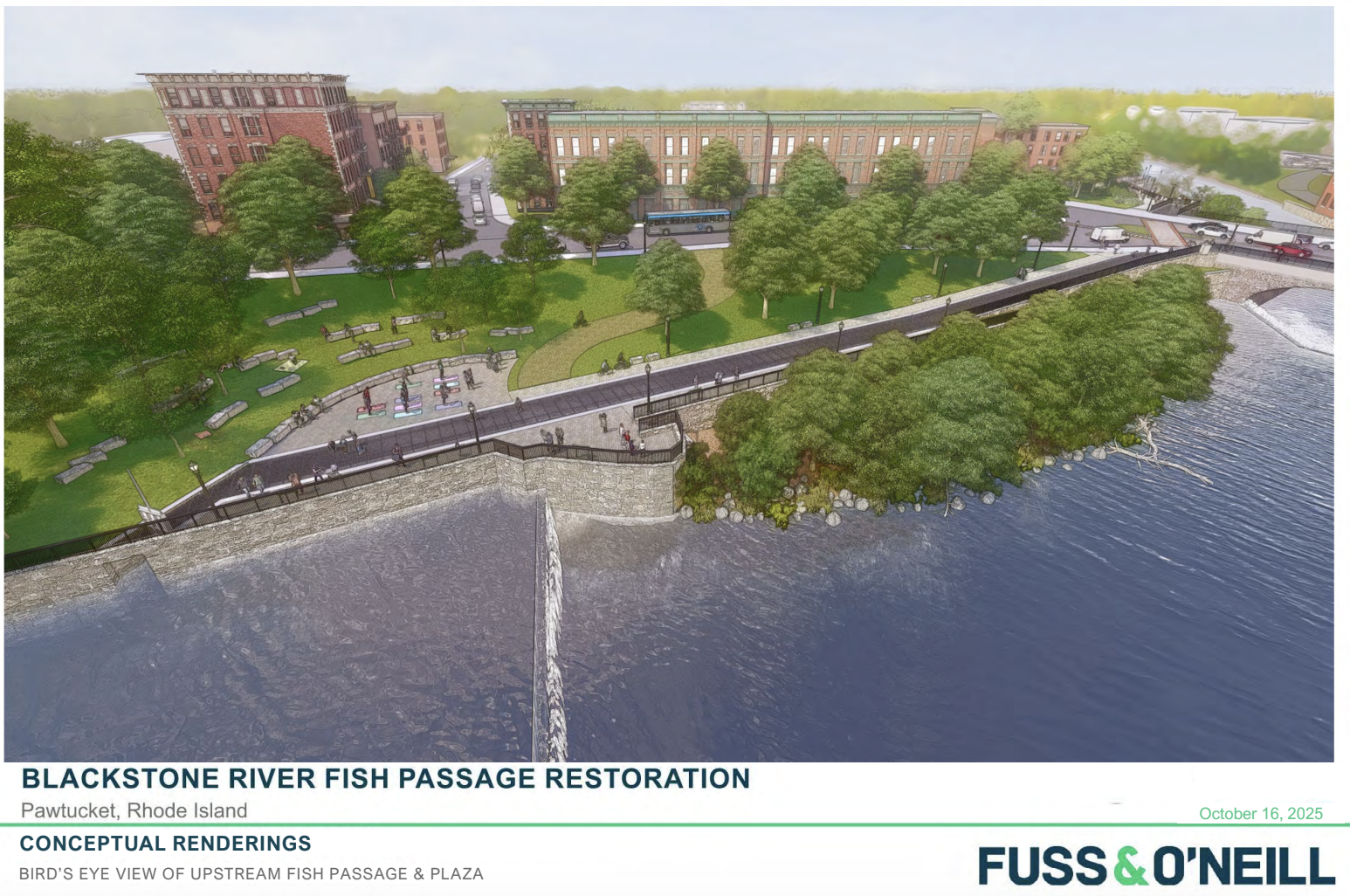
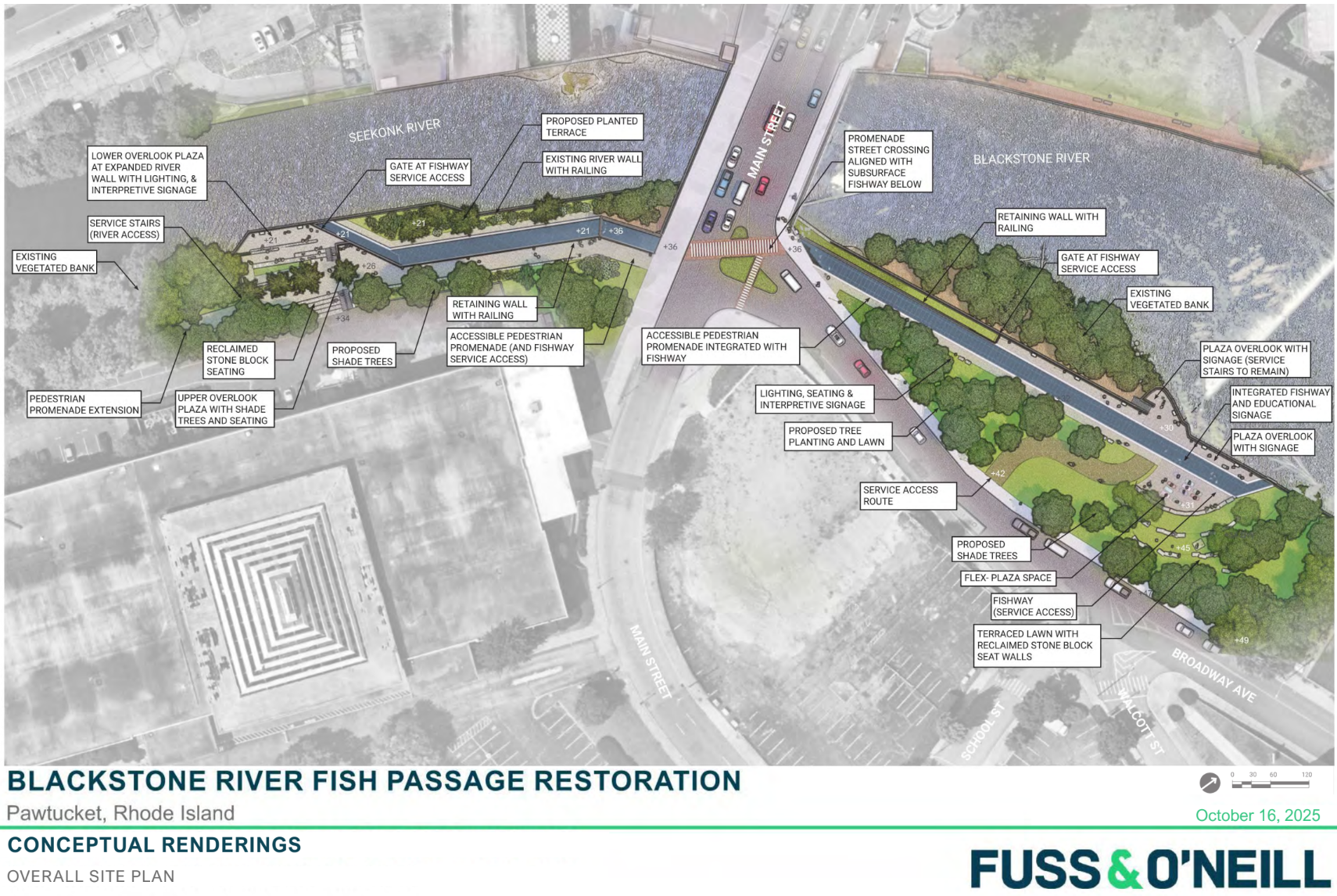
In 2025, new renderings were developed to help visualize potential fish passage designs and river restoration concepts around the Main Street and Slater Mill Dams. Check them out to see how these ideas could take shape along the lower Blackstone and improve not only fish passage, but also recreation and placemaking in downtown Pawtucket.
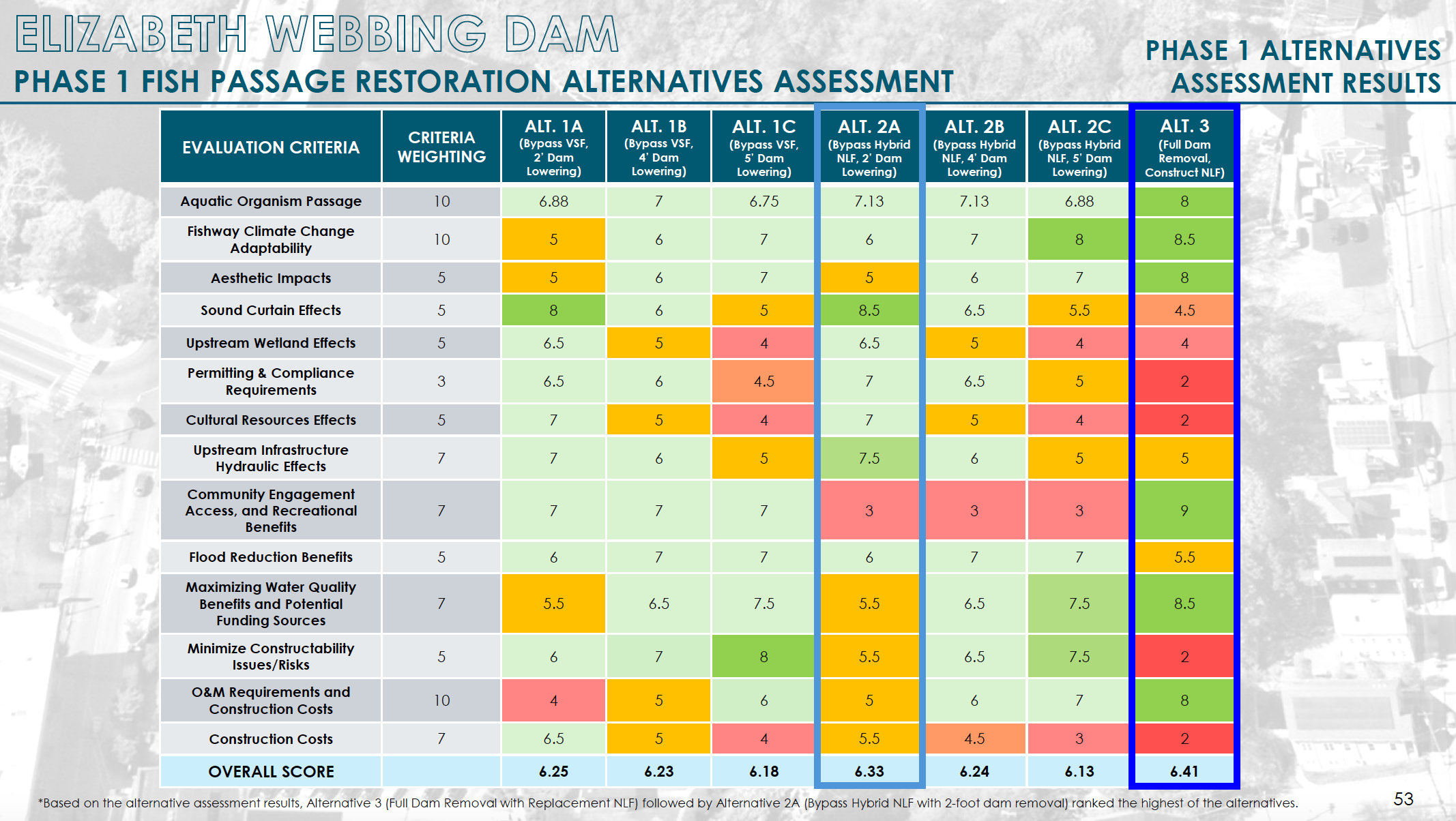
In 2026, RIDEM worked with TNC and Fuss & O’Neill to conduct an alternatives analysis of ways to get migratory species around or over Elizabeth Webbing Dam. The study released to the Community Advisory Council demonstrated that full removal and construction of an in-river nature-like fishway would provide the most benefits across the board, including climate adaptability, community access and recreation, water quality, and aquatic connectivity. Explore the summarized matrix below, which can also be found on page 53 of the full report.
The Dams
-
Owner: Blackstone Hydro Associates
Status: Active Hydropower
Preferred Alternative: Undecided
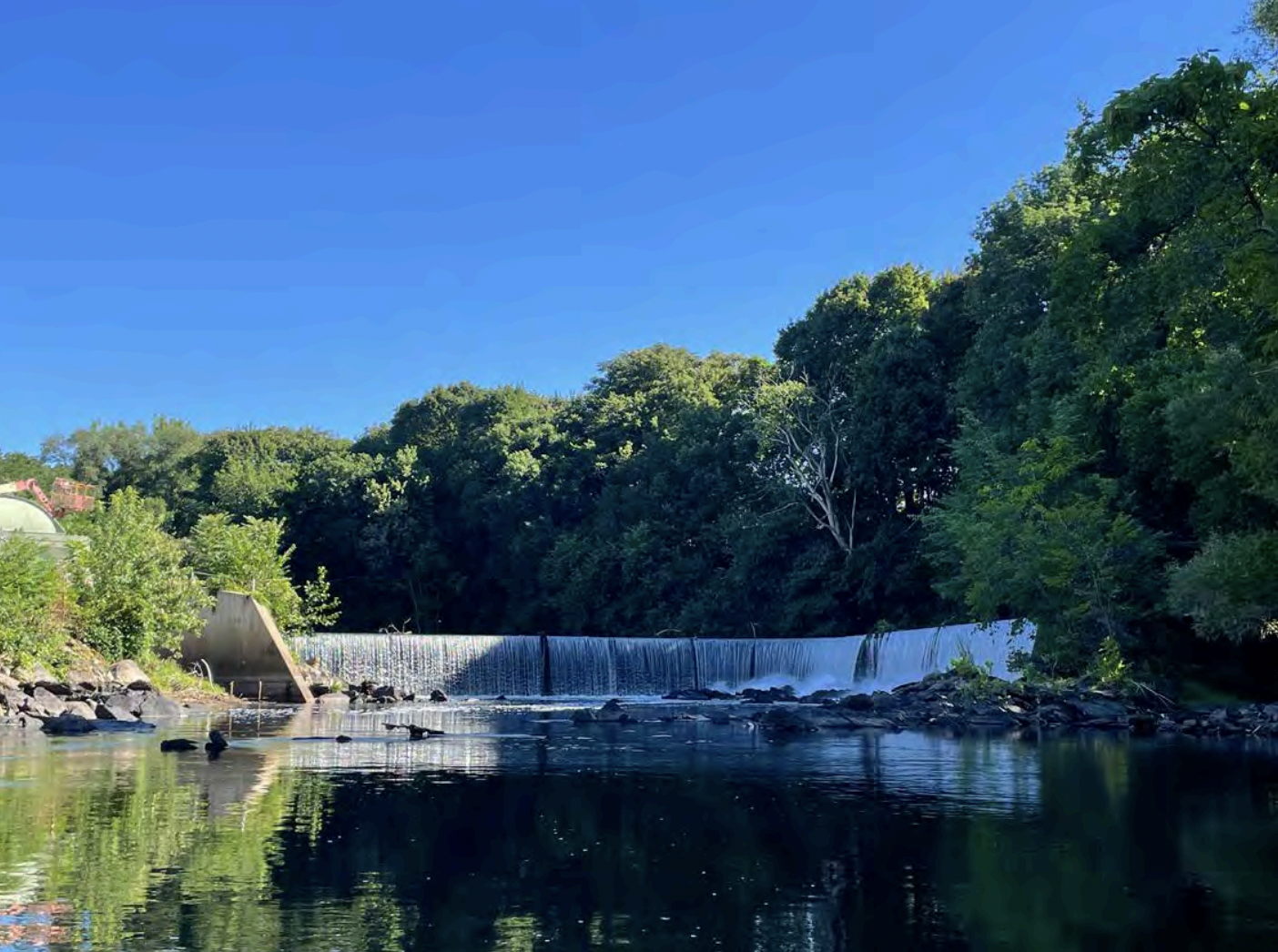
-
Owner: RI DEM
Status: Legacy dam
Preferred Alternative: Full dam removal and construction of in-river nature-like fishway (pending changes to a covenant).
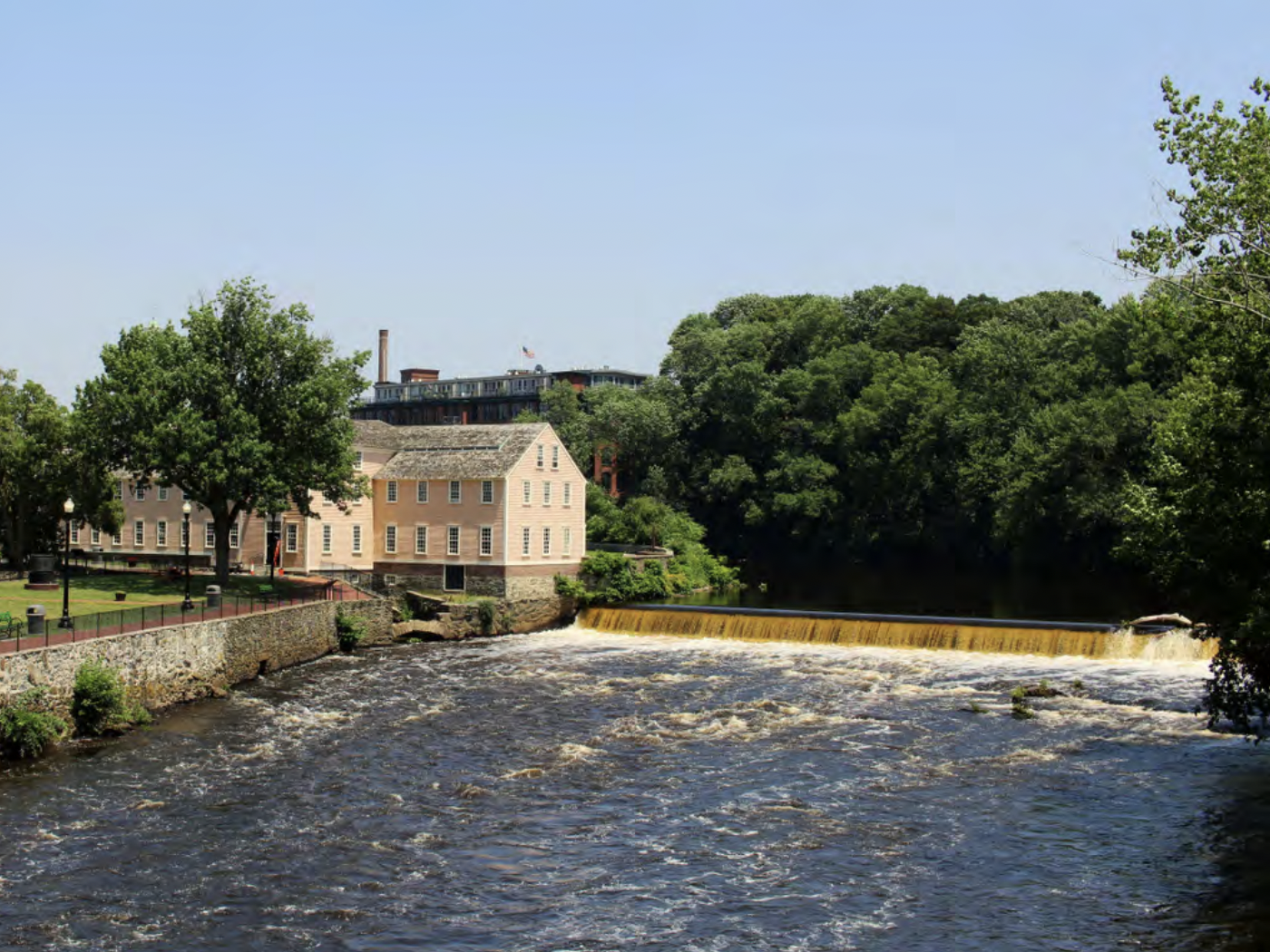
-
Owner: Old Slater Mill Association (eventually to be transitioned to the National Park Service)
Status: Historic Dam
Preferred Alternative: Vertical Slot Fishway
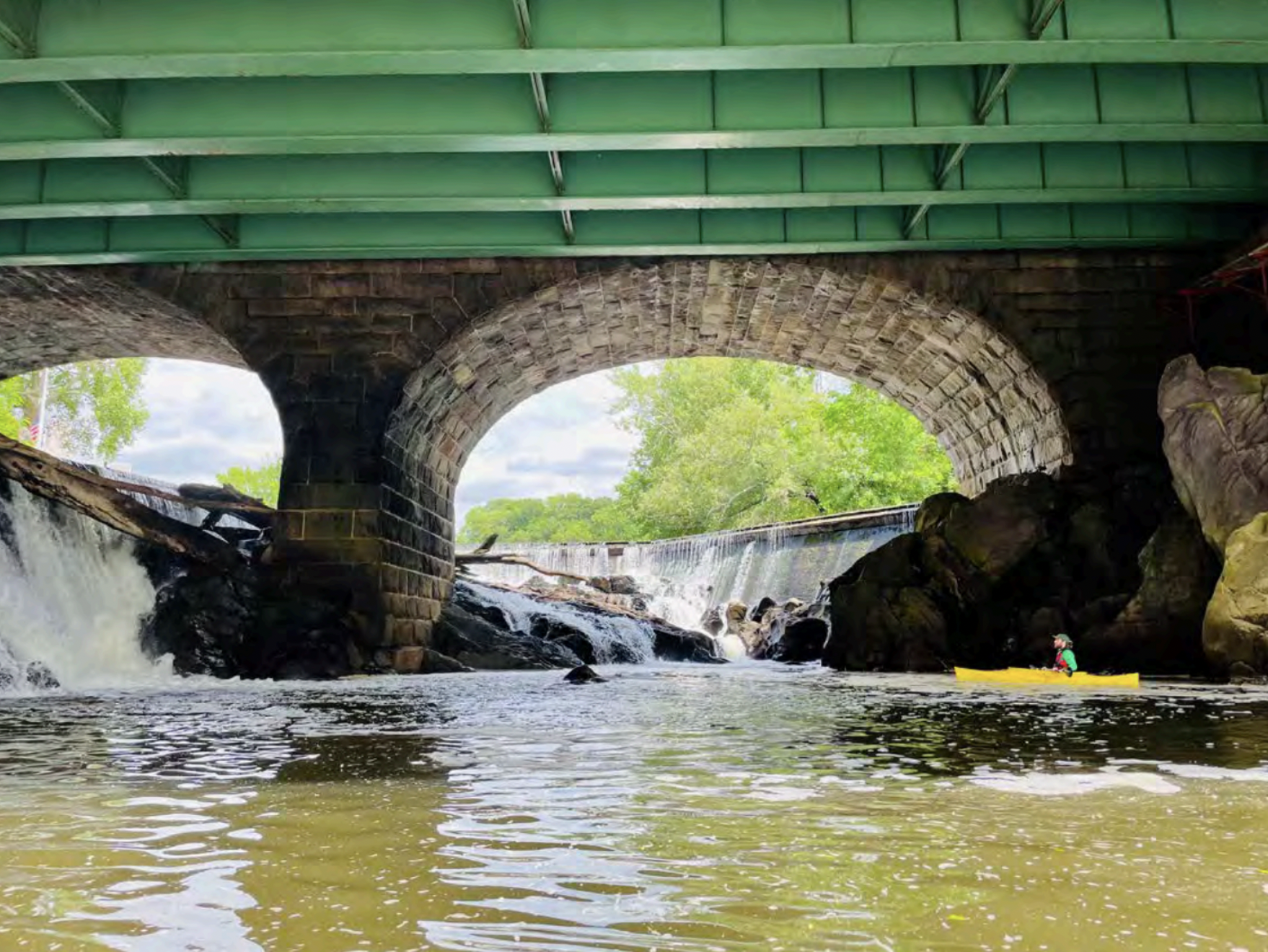
-
Owner: Relevate Power
Status: Active Hydropower
Preferred Alternative: Vertical Slot Fishway
The plan to get fish from the Narragansett Bay to Valley Falls Marsh
Main Street Dam
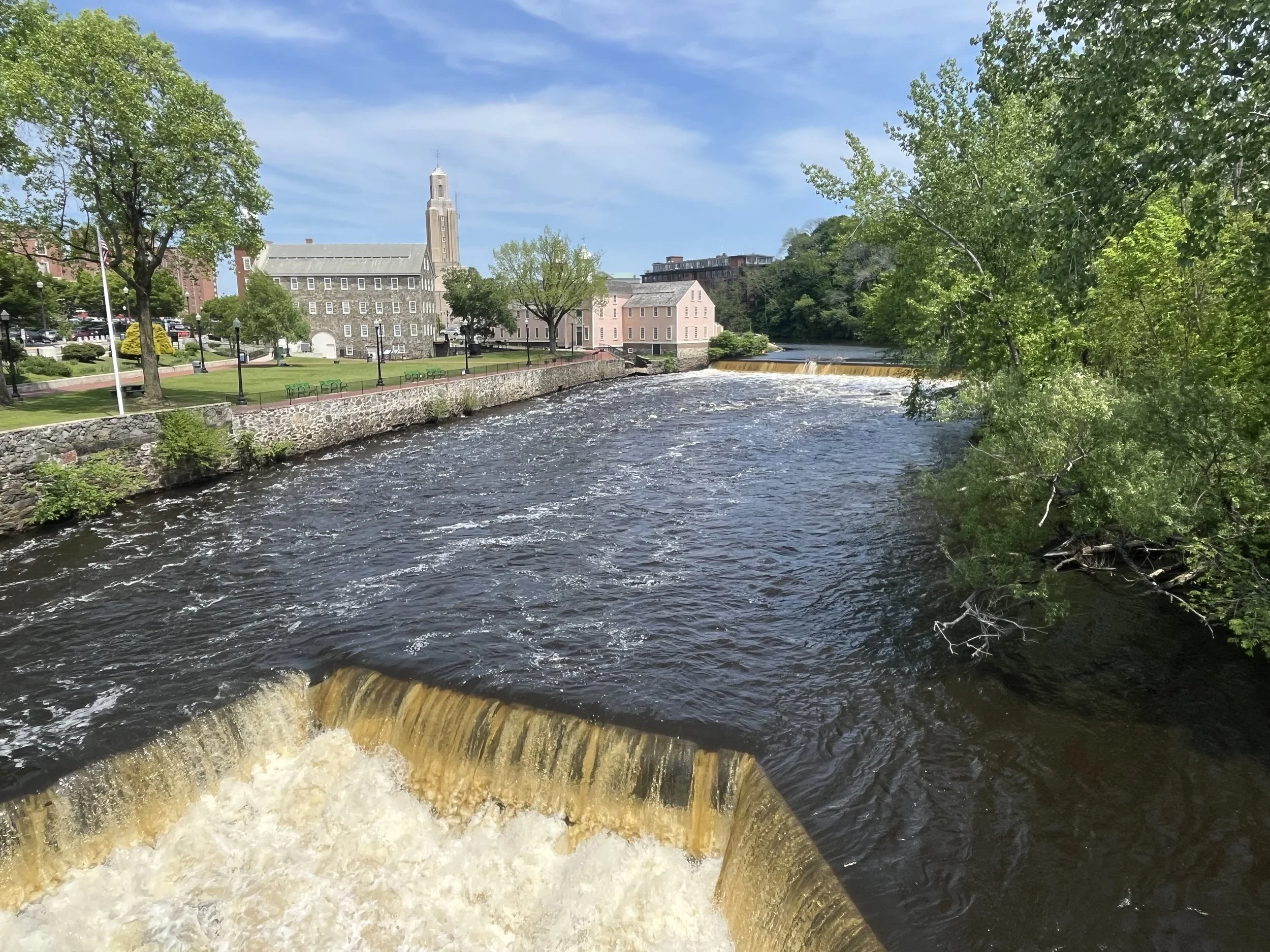
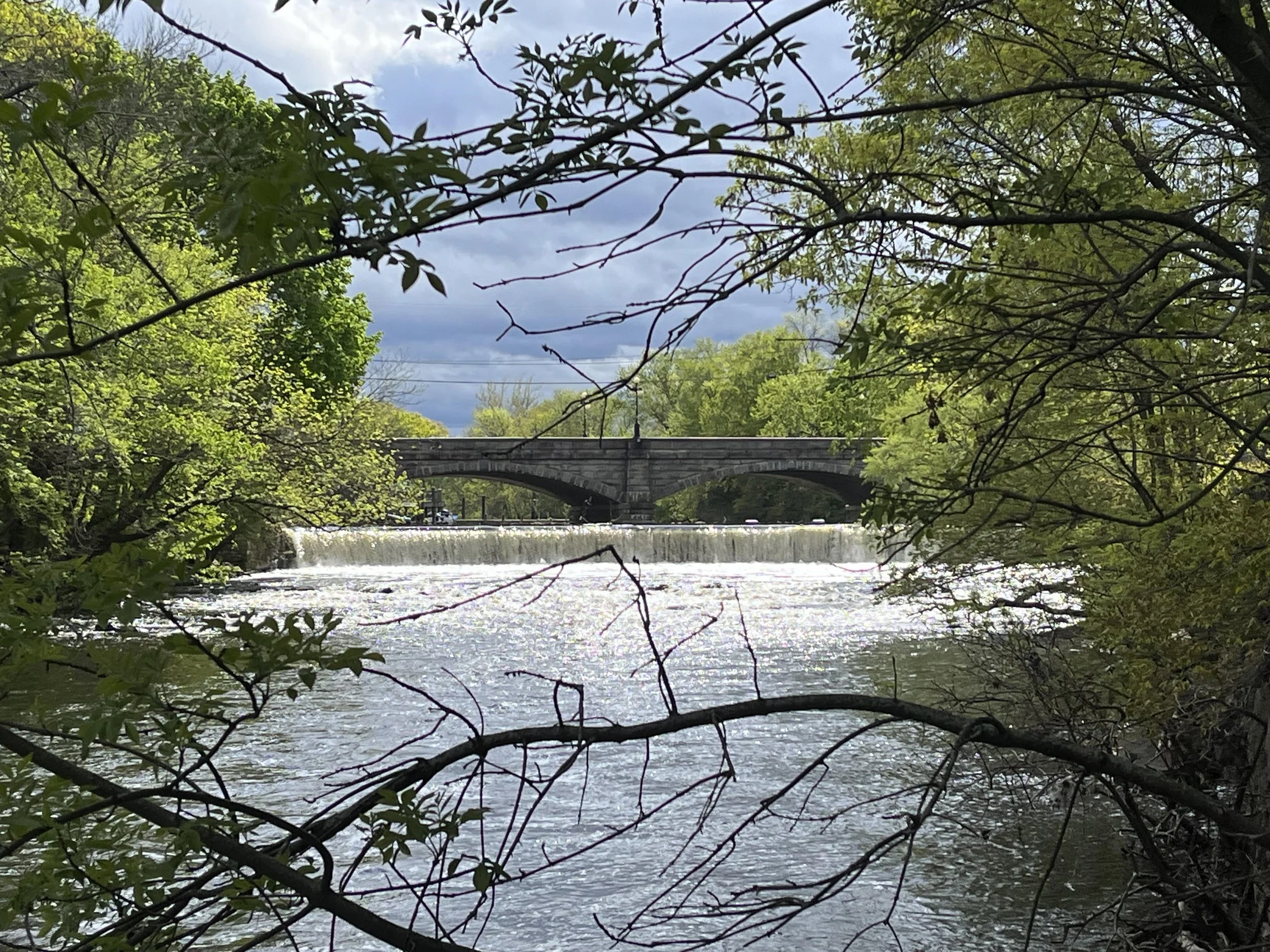
The lowest of the four dams, Main Street Dam, is an active hydroelectric dam regulated by FERC, or the Federal Energy Regulatory Commission, an independent agency that regulates the transmission of electricity, natural gas, and oil across state lines, including hydropower produced by dams. Main Street Dam has a complex history and is not currently held responsible for providing fish passage. For a long time, many argued that fish would never be able to get over the natural falls, so there was no need to recreate
Slater Mill Dam
passage. However, we believe the indigenous peoples’ accounts of herring and shad above the falls — these fish were and are culturally and historically significant to their lifeways, regardless of the availability of first-person written histories. Additionally, there are accounts of Sargent’s Trench being constructed in order to restore fish’s ability to move up and down stream after a natural braid in the river was blocked (which fish originally used to circumventing the falls). This was described in the 1976 account, Battle for Water Power: The Sargeants Trench Case, Pawtucket, 1826:
“William Blackstone came, as the first white settler, in 1635. He found the river teeming with fish — especially with bass, salmon, shad, herring and eels — which negotiated the Falls by means of a channel, known as the “little river” which flowed around the western end of the Falls.”
Over time, Sargeants Trench was filled in and built on, blocking fish from migrating. While we can’t build that back, we can construct passage around the falls for migratory species to once again access their historic spawning grounds.
Just upstream, Slater Mill Dam holds significant cultural and historical significance as the site of the first water-powered cotton spinning mill in America and the site of birth of the Industrial Revolution. It is owned by the Old Slater Mill Association, with an eventual goal to transfer it to the National Park Service, who manages a visitor center and historic museum immediately alongside the dam. Due to its historic value, Slater Mill is not a candidate for removal.
These two dams are remarkably close to one another, providing a unique opportunity to construct one vertical slot fishway structure that runs underground along the river and bypasses both of these two dams. As part of this project, the CAC is proposing to include portage around these dams for recreational paddlers.
Renderings have been developed to help visualize how this proposed fishway and portage could look and function in the landscape. You can explore these concept images in our project renderings slideshow to see how fish passage and recreational access may be restored at this site.
Elizabeth Webbing Dam
Note: a hydropower company has submitted an application to FERC to gain a license to begin producing hydropower here again. RIDEM and CAC members are both opposed to this use of the dam, since it would compromise decades of work to restore migratory fish. RIDEM has made their plans for fish passage and creation of a new public park known to FERC, and members of the CAC including both the Narragansett Indian Tribe and Hassanamisco Nipmuc Band have submitted letters illustrating their disapproval of the plans to add hydropower to this dam.
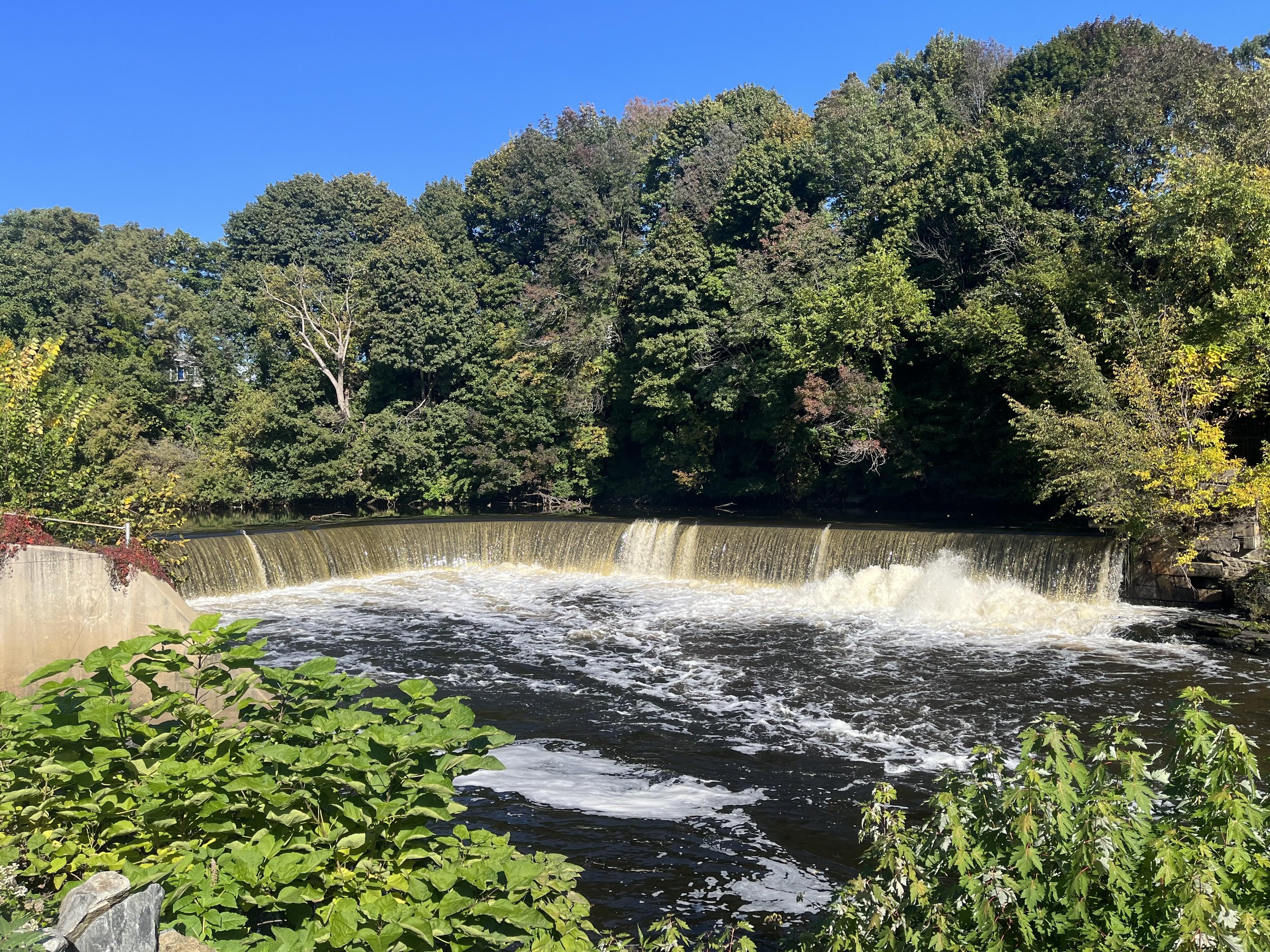
The third dam, Elizabeth Webbing Dam, was decommissioned to produce hydropower in 2001 and was purchased by RIDEM in 2010 in order to create fish passage. RIDEM has explored an alternatives analysis to determine the preferred alternative to allow fish to pass over or around this dam, including a nature-like fishway or vertical slot fishway within the unused hydro bypass channel, and/or lowering of the dam. As of fall 2026, the preferred alternative from this study shows that full removal and construction of an in-river nature-like fishway would provide the most benefits.
Note: a hydropower company has submitted an application to FERC to gain a license to begin producing hydropower here again. RIDEM and CAC members are both opposed to this use of the dam, since it would compromise decades of work to restore migratory fish. RIDEM has made their plans for fish passage and creation of a new public park known to FERC, and members of the CAC including both the Narragansett Indian Tribe and Hassanamisco Nipmuc Band have submitted letters illustrating their disapproval of the plans to add hydropower to this dam.
Valley Falls Dam
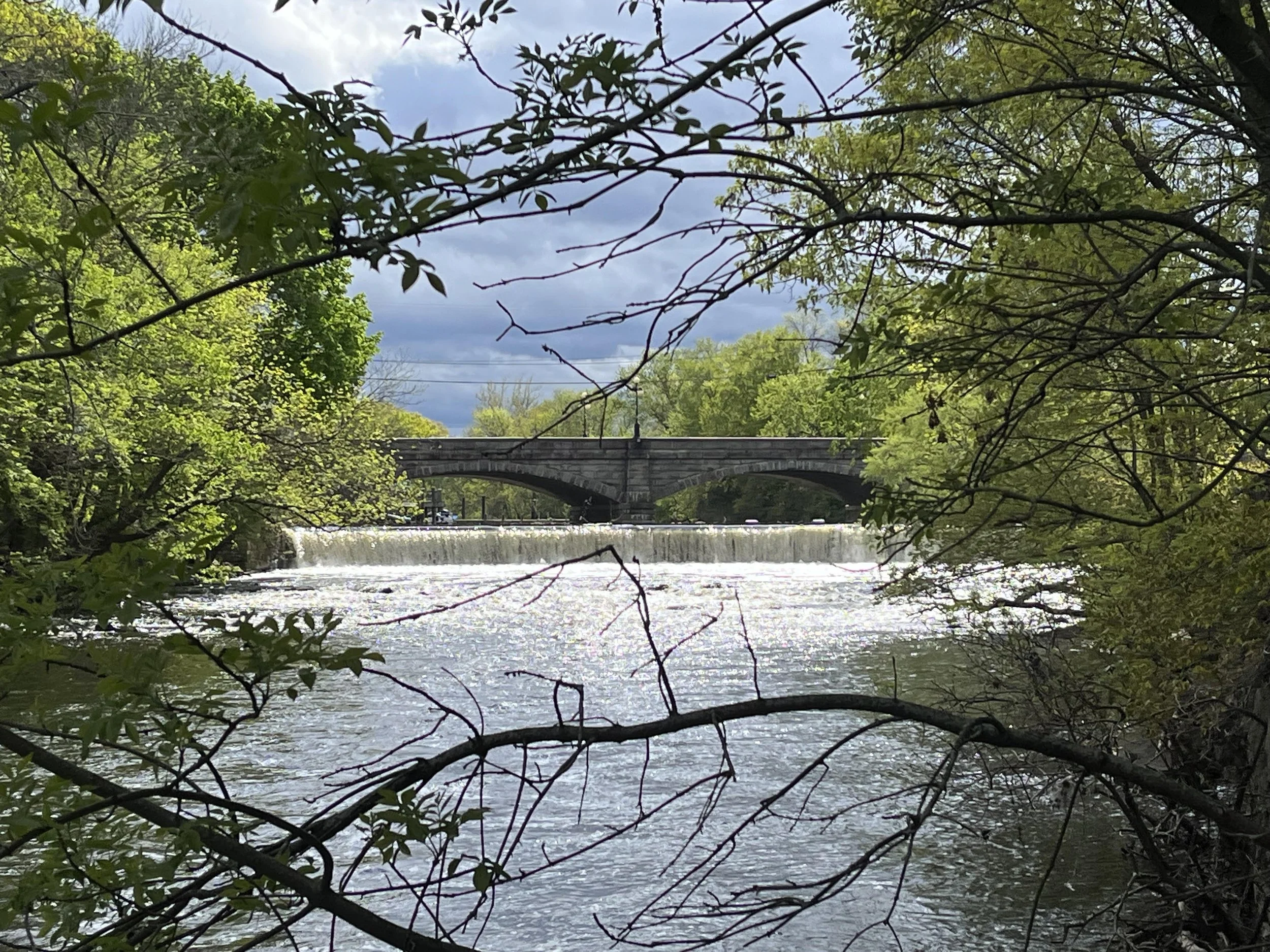
Valley Falls Dam is the fourth and final dam of this phase to get fish to Valley Falls Marsh. As of now, the owners of Valley Falls are not required to provide fish passage, since fish cannot make it to the dam. However, if fish passage is achieved at the lower three dams (Main Street, Slater Mill, and Elizabeth Webbing) it will trigger the fish passage requirements stipulated in Valley Falls’ FERC license.
Valley Falls Marsh
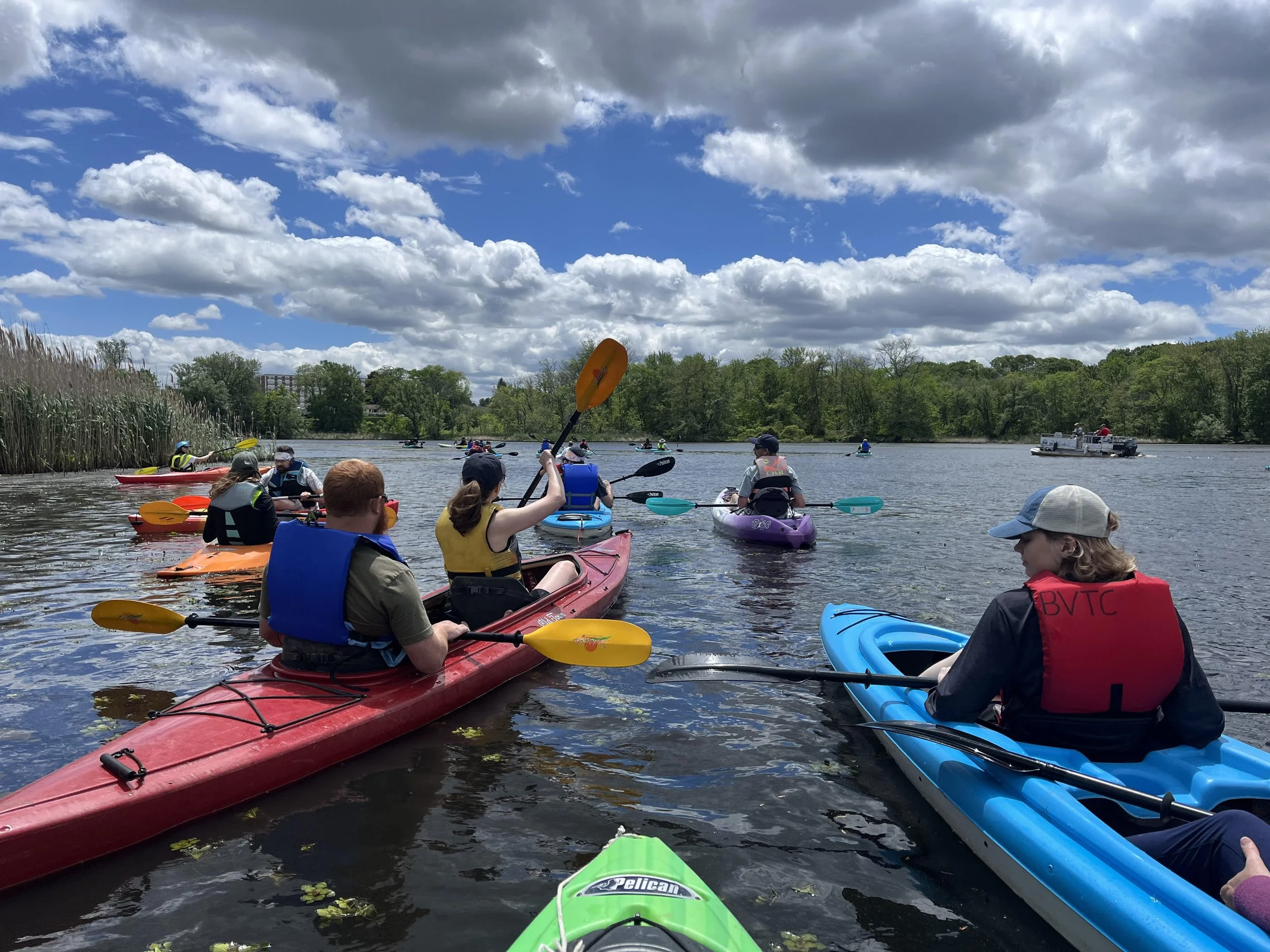
The project’s end goal is to get migratory fish to Valley Falls Marsh, the largest freshwater wetland in RI, just upstream of Valley Falls Dam. Here, migratory fish will be able to spawn and return to the ocean, completing their lifecycle that has been disrupted on the Blackstone for over 200 years.
Fish Passage Community Advisory Committee Meetings
The Fish Passage Community Advisory Committee bring tribes, municipalities, watershed advocates, dam owners, and the state together to enhance transparency and support public outreach and education around the fish passage project. Membership of the CAC is invitation-only, but its monthly meeting notes and meeting recordings are publicly available here. The CAC is comprised of numerous organizations and stakeholders including…


Questions?
Contact the Collaborative at info@blackstonecollaborative.org or reach out to RIDEM’s Matt Gendron, a Diadromous Fisheries Biologist and the River Connectivity Project Coordinator for the Blackstone Fish Passage project: Matthew.E.Gendron.CTR@dem.ri.gov.
Resources